
Bali's Waste Management Crisis and What It Means for Investment Certainty
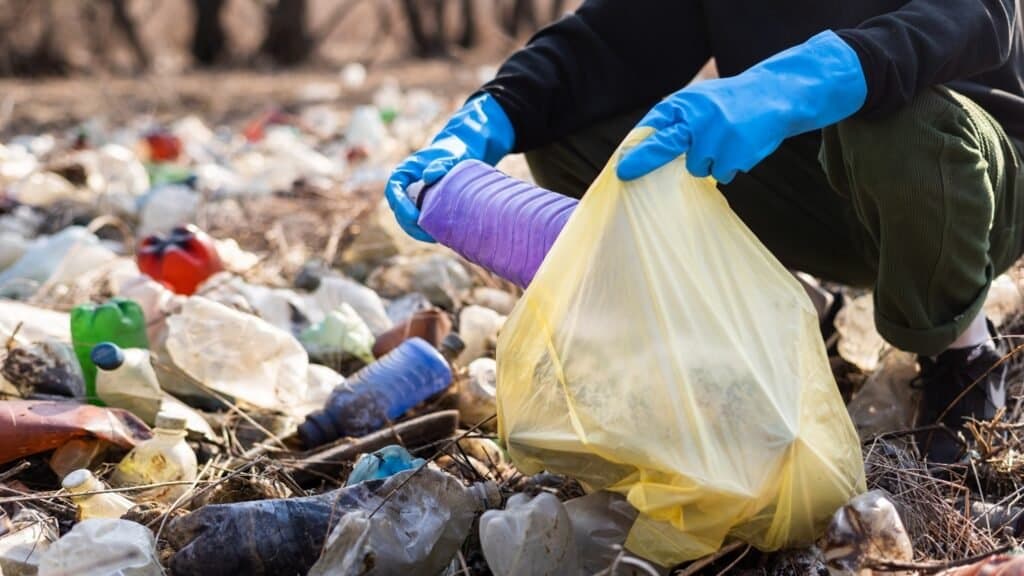
Bali is currently facing a waste crisis reaching boiling point. Attention is centred on the Suwung landfill (TPA Suwung), whose operations were meant to end by March 2026 — and were in fact urged to close earlier, by December 2025. The problem is already acute: waste has piled up well beyond environmental capacity, creating a real risk to public health and safety. The situation is made worse by a reduction, rather than an increase, in the 2026 waste-handling budget — a policy that sits in stark contradiction to the urgent need to build independent waste-processing infrastructure.
Between regulatory ambition and reality on the ground
The Bali Provincial Government has actually been fairly productive in issuing regulations, such as Governor's Regulations restricting single-use plastic and promoting source-based waste management. Yet these regulations feel "blunt" without adequate enforcement. The impact was visible in the flash flooding of September 2025, when city drainage was heavily blocked by plastic waste.
The burden of waste management now appears to have been "passed down" to the level of Desa Adat (customary villages) and Banjar. Even where they have actively activated community-based waste processing (TPS3R), residual waste keeps piling up because there is no synchronised downstream infrastructure. This isn't only a cleanliness issue — it is also creating uncertainty for the tourism investment climate.
Legal responsibility and "good governance"
In law, waste management is a mandatory public service obligation. Under Law No. 18 of 2008 on Waste Management, the responsibility is clearly divided:
Central Government: regulator of national standards.
Provincial Government: cross-regional coordinator.
Regency/City Government: operational executor and provider of landfill facilities.
On the ground, however, violations at TPA Suwung have continued. Articles 44 and 45 of the Waste Management Law require the closure of open-dumping systems no later than five years from 2013. Operating TPA Suwung through to 2026 plainly disregards the service-life limit set under Minister of Public Works Regulation No. 03/PRT/M/2013.
From a good-governance standpoint, this imbalance shows a breach of three important principles:
Principle of diligence: the government is seen as insufficiently careful in anticipating an environmental emergency, particularly by allowing primary public infrastructure to fall into disrepair.
Principle of public interest: the public's right to a healthy environment has been neglected, as waste handling has not been made a budgetary priority.
Principle of accountability: the public is entitled to ask where regional resources are actually being directed, given that a functioning waste-processing facility (TPST) has yet to materialise.
Impact on the investment climate and Bali's reputation
For investors and businesses in the hospitality and restaurant sectors, this crisis is a serious threat. Three risks now loom:
Brand risk: international tourists are increasingly critical of environmental issues. Bali's image as a "Green Destination" could fade if the waste problem isn't addressed systemically.
Cost burden: businesses are forced to spend extra to process their own waste independently in order to maintain service standards.
ESG standards: global investors treat environmental responsibility as a core requirement. This waste crisis can hinder capital flows into sustainability-focused projects in Bali.
Legal remedies available
If the government continues to be negligent, the public need not be powerless. Under Articles 36 and 37 of the Waste Management Law, an aggrieved community has the right to bring a Class Action or a Citizen Law Suit, depending on whether compensation is being sought from the government. Such a lawsuit can seek a mandatory injunction, including:
1. An order to normalise drainage to prevent flooding.
2. An order for a technical audit of the over-capacity landfill.
3. A demand for certainty on the realisation of a modern waste-processing facility ahead of the closure deadline for the Regional Landfill serving Denpasar, Badung, Gianyar, and Tabanan at Suwung.
Bali's waste governance needs a complete overhaul — not just new rules, but fixes to the underlying fiscal and technical problems. The closure of TPA Suwung in March 2026 should become a turning point for restoring the public's right to a healthy environment. For Bali, legal certainty in the environmental sphere isn't only about cleanliness — it is an absolute precondition for investment to keep growing sustainably on the Island of the Gods.
- Atnews.id, “Penutupan TPA Suwung, Berapa APBD Bali 2025 untuk Sampah?,” 17 December 2025.
- Dinas Pekerjaan Umum, Penataan Ruang, Perumahan dan Kawasan Permukiman Provinsi Bali, “Krisis Pengelolaan Sampah di Bali Menjelang Penutupan TPA Suwung 23 Desember 2025,” Taru Bali, 9 December 2025.
- Kementerian Lingkungan Hidup, “TPA Suwung Tutup Maret 2026, Menteri LH Dorong Bali Jadi Pelopor Pengelolaan Sampah Modern Tanpa Open Dumping,” 31 December 2025.
- N. K. Y. Utami, “Pengamat Kritik Alokasi Dana Penanganan TPA Suwung Tahun 2026 Menurun,” IDN Times Bali, 25 December 2025.
- Law No. 18 of 2008 on Waste Management.
- Government Regulation No. 81 of 2012 on Household Waste Management.
- Minister of Public Works Regulation No. 03/PRT/M/2013.
- Bali Regional Regulation No. 5 of 2011 on Waste Management.
- Bali Governor's Regulation No. 97 of 2018 on the Restriction of Single-Use Plastic.
- Bali Governor's Regulation No. 47 of 2019 on Source-Based Waste Management.
- Bali Governor's Circular No. 9 of 2025 on the Bali Clean of Waste Movement.